




Natural stone products are among the most valuable and durable construction materials in the global market. However, despite their strength, stone slabs and tiles can be vulnerable during transportation if they are not packaged correctly. For importers, distributors, contractors, and project developers, understanding stone packaging standards is essential to reducing risks and protecting investments.
International shipping often involves long transit times, multiple handling stages, container loading operations, and varying environmental conditions. Without proper stone export packaging, even premium-quality materials can arrive damaged, resulting in financial losses, project delays, and customer dissatisfaction.
This guide explores the most important packaging standards and best practices that help ensure stone shipping safety during international transportation.
Why Stone Packaging Standards Matter
Stone products are heavy, fragile at the edges, and susceptible to impact damage during transportation. Even minor packaging failures can lead to cracks, breakage, chipped corners, or surface defects.
Professional stone packaging standards are designed to protect materials throughout the entire logistics process, from factory loading to final delivery.
Effective packaging helps:
- Reduce transportation damage
- Minimize financial losses
- Improve customer satisfaction
- Protect product quality
- Support efficient handling
- Ensure safe container transportation
For companies involved in international trade, packaging quality is just as important as product quality.
Challenges of International Stone Transportation
Shipping natural stone internationally presents several unique challenges.
Products may travel thousands of kilometers through sea freight, land transportation, or multimodal logistics networks. During this journey, materials are exposed to vibration, movement, humidity, temperature changes, and repeated handling.
Common risks include:
- Slab breakage
- Edge chipping
- Surface scratching
- Moisture exposure
- Improper stacking
- Container movement
Understanding these risks helps suppliers implement packaging solutions that improve stone shipping safety.
Export-Grade Wooden Crates
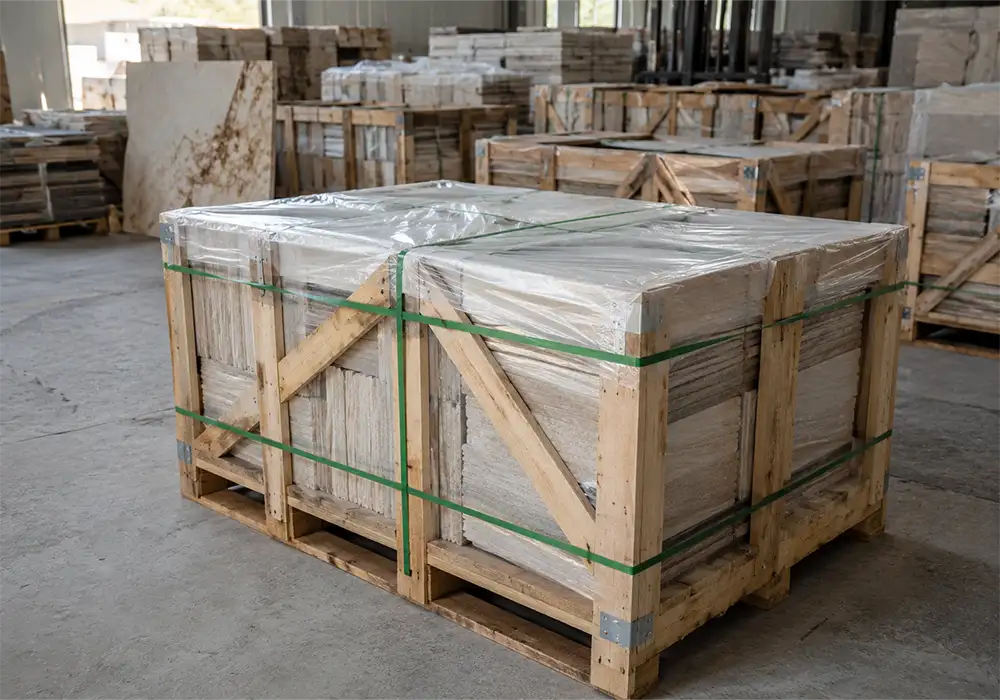
One of the most important stone packaging standards is the use of export-grade wooden crates.
High-quality wooden crates provide structural protection and help secure stone slabs during transportation. Professional crates are specifically designed to support the weight of natural stone while preventing movement inside the package.
Effective export crates typically include:
- Reinforced timber construction
- Strong base support
- Internal stabilization systems
- Secure fastening points
- Forklift accessibility
Well-designed wooden crates significantly reduce transportation risks.
Edge Protection Systems
Stone edges are particularly vulnerable during handling and shipping.
Professional suppliers use edge protection systems to prevent damage caused by impacts and movement.
Common protection methods include:
- Foam corner protectors
- Rubber edge guards
- Protective strips
- Shock-absorbing materials
These components help maintain product integrity throughout transportation and handling operations.
Protective Separation Materials
Direct contact between stone slabs can cause scratches, cracks, and surface damage.
To prevent this, suppliers place protective materials between individual slabs.
Common separation materials include:
- Foam sheets
- Plastic spacers
- Protective films
- Soft cushioning materials
These layers reduce friction and improve overall packaging performance.
Moisture Protection During Shipping
Humidity and moisture can create challenges during international transportation, especially during sea freight operations.
Professional stone export packaging often includes moisture-resistant materials designed to minimize environmental exposure.
Protection methods may include:
- Plastic wrapping
- Moisture barriers
- Waterproof covers
- Container humidity control solutions
Moisture protection is particularly important for long-distance shipments and regions with varying climate conditions.
Container Loading Best Practices
Even the best packaging can fail if container loading procedures are not properly managed.
Correct loading practices help prevent movement during transportation and reduce the likelihood of damage.
Best practices include:
- Proper weight distribution
- Secure crate positioning
- Use of bracing systems
- Container stabilization
- Professional loading supervision
Experienced exporters understand the importance of proper loading procedures and incorporate them into their logistics operations.
Quality Control Before Shipment
Packaging quality should be verified before products leave the facility.
Professional suppliers conduct inspections to ensure:
- Crates are structurally sound
- Protective materials are correctly installed
- Labels are accurate
- Fastening systems are secure
- Products are properly positioned
Final inspections help identify potential issues before transportation begins.
How Proper Packaging Reduces Costs
Many buyers focus primarily on product pricing, but packaging quality can significantly affect total project costs.
Proper packaging helps reduce:
- Product replacement expenses
- Transportation claims
- Delivery delays
- Customer complaints
- Reordering costs
Investing in high-quality packaging often results in lower overall costs and improved customer satisfaction.
What Importers Should Ask Suppliers
Before placing an order, importers should discuss packaging standards with potential suppliers.
Important questions include:
- What type of export crate is used?
- Are edge protection systems included?
- How are slabs separated inside the crate?
- What moisture protection methods are applied?
- Can packaging photographs be provided?
- How are containers loaded and secured?
These questions help buyers evaluate supplier professionalism and commitment to quality.
Common Packaging Mistakes to Avoid
Several packaging mistakes can increase transportation risks.
Common issues include:
- Weak wooden crates
- Insufficient edge protection
- Poor weight distribution
- Inadequate moisture barriers
- Improper container loading
Avoiding these mistakes helps improve shipping outcomes and protect valuable stone products.
Future Trends in Stone Export Packaging
The natural stone industry continues to improve packaging technologies and transportation practices.
Emerging trends include:
- Sustainable packaging materials
- Advanced protective systems
- Smart shipment tracking
- Enhanced moisture control solutions
- Improved crate engineering
These innovations help increase stone shipping safety and improve supply chain performance.
Conclusion
Stone packaging standards play a critical role in international trade. High-quality packaging protects products, reduces transportation risks, and supports successful project execution.
From export-grade wooden crates and edge protection systems to moisture barriers and professional container loading, every aspect of packaging contributes to shipment safety.
For importers and distributors, choosing suppliers that prioritize stone export packaging is an important step toward reducing costs, protecting investments, and ensuring reliable product delivery.
Frequently Asked Questions
Why are stone packaging standards important?
They help protect products from transportation damage, reduce financial losses, and improve customer satisfaction.
What is the best packaging method for stone slabs?
Export-grade wooden crates combined with edge protection systems and moisture barriers are considered the most effective solution.
How can importers verify packaging quality?
Buyers should request packaging photos, loading documentation, and detailed information regarding crate construction and protective materials.
Does better packaging increase shipping costs?
While premium packaging may increase initial costs slightly, it often reduces overall expenses by preventing damage and replacement costs.