





Introduction
Importing natural stone slabs can be a highly profitable business opportunity for distributors, wholesalers, contractors, and construction companies. However, a successful stone slab import process requires much more than simply selecting a supplier and placing an order. Buyers who understand the key factors involved in sourcing natural stone are better positioned to reduce risks, maintain product quality, and build long-term supply relationships.
A bulk stone purchase represents a significant investment. Whether the project involves marble, travertine, granite, limestone, or onyx, every shipment must meet quality expectations, arrive safely, and comply with project specifications. For this reason, importers should carefully evaluate suppliers before committing to large-volume orders.
Why Stone Slab Import Requires Careful Planning
The global natural stone industry offers a wide range of sourcing opportunities, but not all suppliers provide the same level of quality, service, or reliability. A successful stone slab import strategy begins with careful planning and supplier evaluation.
Importers should consider product consistency, production capacity, export experience, packaging standards, logistics capabilities, and communication quality. These factors have a direct impact on project success and customer satisfaction.
Businesses that focus only on price often encounter issues such as inconsistent quality, delayed deliveries, or damaged products. A strategic purchasing approach helps minimize risks and maximize long-term value.
Evaluating Stone Quality Before Purchase
Quality verification is one of the most important steps in any bulk stone purchase. Natural stone products vary in color, texture, veining, and structural integrity. Importers should always request current inventory photos, product videos, technical specifications, and physical samples before placing an order.
Color consistency is particularly important for large construction projects. While natural variation is expected, excessive differences between slabs can create installation challenges and affect the final appearance of the project.
Surface quality should also be carefully reviewed. Polished, honed, brushed, and other finishes must meet project requirements and maintain consistency throughout the shipment. Buyers should additionally inspect slabs for cracks, weak veins, excessive filling, or other defects that may impact durability.
Dimensional accuracy is another critical factor. Consistent thickness and precise measurements help ensure smooth installation and reduce material waste during project execution.
The Importance of Professional Stone Packaging
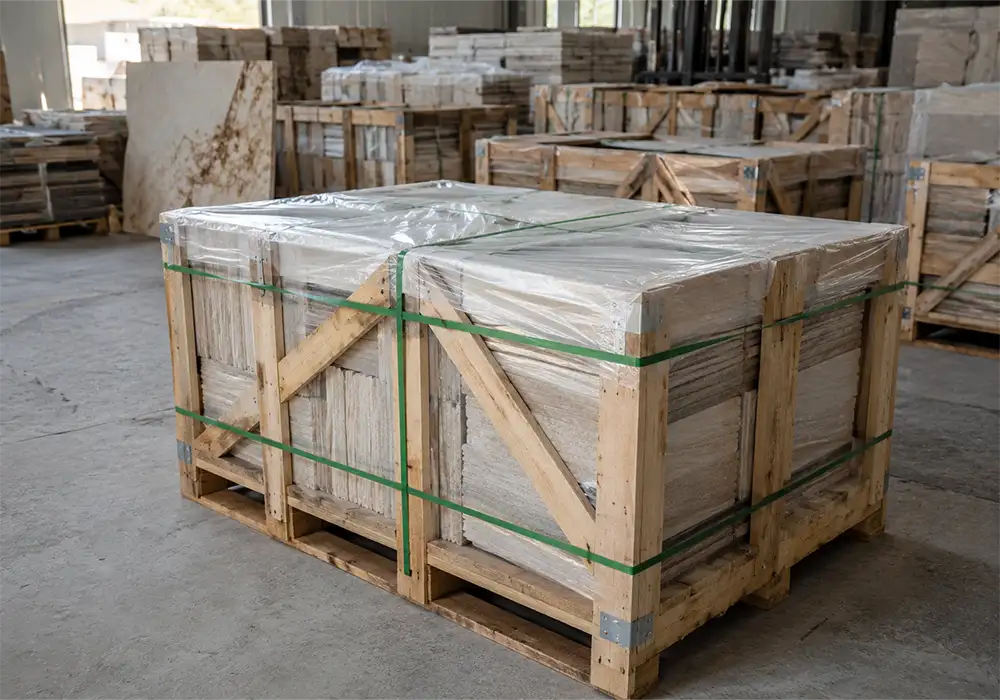
One of the most overlooked aspects of stone slab import is packaging quality. Natural stone products are heavy and fragile, making them vulnerable to transportation damage if they are not properly protected.
Professional exporters use reinforced wooden crates, protective separators, edge guards, moisture-resistant materials, and secure container loading methods to protect products throughout the shipping process.
Importers should request packaging photographs and loading documentation before shipment. Proper packaging not only reduces the risk of damage but also lowers replacement costs and project delays.
Investing in high-quality packaging is often far more cost-effective than dealing with damaged products after arrival.
Choosing the Right Natural Stone Supplier
Selecting a reliable natural stone supplier is one of the most important decisions an importer can make. A supplier should be evaluated based on quality standards, export experience, production capabilities, communication practices, and long-term reliability.
Experienced suppliers understand international trade requirements and can provide support with shipping documentation, customs procedures, logistics coordination, and packaging solutions.
Importers should also assess responsiveness during the inquiry process. Fast, accurate communication often reflects a supplier’s overall professionalism and commitment to customer service.
Building a partnership with a trusted natural stone supplier creates opportunities for long-term collaboration and sustainable business growth.
Understanding Production Capacity and Supply Consistency
For distributors and project-based buyers, production capacity is a major consideration. A supplier may be capable of fulfilling a single order but struggle to maintain consistency across multiple shipments.
Importers should confirm production capabilities, inventory availability, lead times, and supply continuity before entering long-term agreements.
Large construction projects often require matching materials over several phases. Consistent production standards help ensure visual uniformity and prevent costly project disruptions.
Reliable suppliers typically have established quality control systems and scalable production processes to support ongoing demand.
Looking Beyond the Lowest Price
Many importers make the mistake of selecting suppliers based solely on price. While competitive pricing is important, it should not be the only factor influencing purchasing decisions.
The total cost of a bulk stone purchase includes packaging, transportation, freight, customs duties, insurance, handling fees, and potential quality-related expenses.
A lower product price may ultimately result in higher overall costs if quality issues, transportation damage, or delivery delays occur. Successful importers evaluate the total landed cost rather than focusing exclusively on unit pricing.
This approach provides a more accurate understanding of the true value offered by a supplier.
Technical Specifications Matter
Technical documentation plays a vital role in the stone slab import process. Buyers should obtain detailed information regarding slab dimensions, thickness, density, water absorption, finish options, and recommended applications.
These specifications help architects, engineers, contractors, and project managers verify compatibility with project requirements.
Professional suppliers are typically prepared to provide comprehensive technical data that supports purchasing decisions and reduces uncertainty.
Accurate technical information also improves communication between suppliers, contractors, and end customers.
Common Mistakes Importers Should Avoid
Many challenges associated with stone slab import can be avoided through proper planning and supplier evaluation.
Common mistakes include purchasing based only on price, skipping sample verification, overlooking packaging quality, ignoring technical specifications, and working with suppliers that lack export experience.
Another frequent mistake is failing to establish clear communication regarding production timelines and delivery expectations. Misunderstandings can create delays and affect project schedules.
Taking a structured approach to supplier selection significantly reduces these risks and improves purchasing outcomes.
Building Long-Term Supplier Relationships
The most successful importers view supplier relationships as long-term partnerships rather than one-time transactions. Strong partnerships provide greater stability, improved pricing opportunities, consistent quality, and priority access to production capacity.
A trusted natural stone supplier can become a valuable extension of an importer’s supply chain, helping support future growth and project success.
As demand increases, reliable supplier relationships become even more important for maintaining quality standards and meeting customer expectations.
Long-term cooperation benefits both parties and creates a stronger foundation for sustainable business development.
Conclusion
A successful stone slab import strategy requires careful planning, supplier evaluation, quality verification, and logistics management. Importers who prioritize quality consistency, professional packaging, technical documentation, and supplier reliability are better positioned to achieve long-term success.
Whether you are making your first bulk stone purchase or expanding an existing distribution network, selecting the right natural stone supplier can significantly influence profitability and customer satisfaction.
By focusing on quality, reliability, and long-term value rather than short-term cost savings, importers can build stronger supply chains and create sustainable opportunities within the global natural stone market.
Frequently Asked Questions About Stone Slab Import
What is the most important factor in stone slab import?
Quality consistency, supplier reliability, and proper packaging are the most important factors in a successful stone slab import process.
How can I verify stone quality before importing?
Request physical samples, detailed product photos, technical specifications, and quality inspection reports before placing an order.
Why is packaging important when importing stone slabs?
Professional packaging reduces transportation damage and protects the investment during international shipping.
How do I choose a reliable natural stone supplier?
Look for export experience, production capacity, quality control procedures, and responsive communication.